Living
Report Shows Ozone Hole Could Heal by 2060

During the ’70s, the ozone layer has started to degrade as a result of pollutant emissions. According to the online report that was performed by the United Nations, the huge hole in the ozone layer might be utterly cured from the 2060s—and even in some regions of the world, it could be by approximately 2030.
Roughly a few dozen years ago, we decided that our world’s ozone layer was declining as a result of the widespread use of CFCs. If we didn’t make timely reforms in this area, we could not support our civilization.
Paul Newman, a NASA scientist and UN Special, was among those who led the UN’s Ozone Watch.
We’re at the turnaround point.
Hazardous chemicals, known as chlorofluorocarbons and hydrofluorocarbons, may be found in aerosol cans and refrigerators, in their use, the chemicals release chlorine into the stratosphere, where it breaks down ozone molecules. It’s particularly notable in Antarctica, which has a large hole that formed during the eighties.
This year celebrates “32 Years and Healing” success, since marked on September 16th, as a recognition when the world came together on World Ozone Day.
The positive effects of effective lessening of our planet’s CO2 emissions were fully tied to regenerating ozone. Thanks to this, around 135 billion tonnes of carbon dioxide were avoided from 1990 to 2010.
The ozone-depleting substances present on earth today cause higher volumes of ultraviolet radiation, causing toxic chemicals to harm agriculture as well as the forest lands, and increasing skin cancers.
The Canadian government developed the treaty, which was later ratified by the full United States, in 1988. The Montreal Protocol was the first treaty to receive universal ratification.
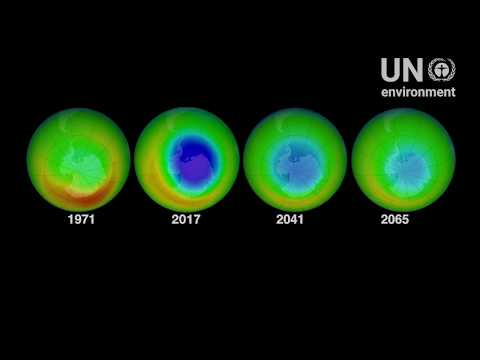
When we come together as a human race to prevent global issues, we can make a difference.
Source:
www.goodnewsnetwork.org
news.un.org
www.sdentertainer.com
gizmodo.com