Connect with us

Money

To Bolster Grassroots Groups’ Demands for Climate Action, Philanthropists Raise $600,000 for Extinction Rebellion and School Strikers

Published

on

Demands for Climate Action
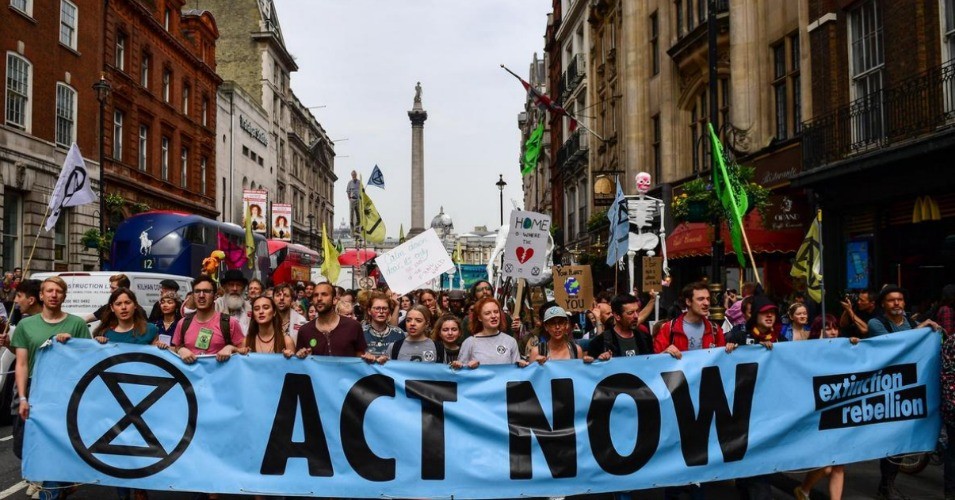
Photo: @ExtinctionR/Twitter

By Julia Conley

Heeding the call of grassroots campaigners, several wealthy philanthropists announced Friday a new fund that will raise money for climate action groups around the world.

Investor Trevor Neilson, filmmaker Rory Kennedy, and Aileen Getty of the Getty Oil family have so far raised more than $625,000 for their Climate Emergency Fund (CEF). The philanthropists plan to raise at least 100 times that amount over the next several months by appealing to other rich and powerful contacts around the globe, calling on them to use their immense wealth to help demand that governments take immediate, decisive climate action.

“In the past, philanthropy has often been about personal interest, but now people are realizing that we are all in this together and putting their money forward for our collective well-being.”—Extinction Rebellion

Echoing the message that groups like Extinction Rebellion and the School Strike for Climate movement have been spreading for months, Neilson said he recently realized that most people who hold enough wealth to potentially sway lawmakers haven’t grasped that incremental progress to fight the climate crisis is not sufficient.

“The world’s biggest philanthropists are still in a gradualist mindset,” Neilson told The Guardian. “We do not have time for gradualism.”

Extinction Rebellion, which will receive a large portion of the money raised by the fund so far and which inspired Neilson to use his wealth for the cause, welcomed the development of CEF.

“It’s a signal that we are coming to a tipping point,” said a spokesperson. “In the past, philanthropy has often been about personal interest, but now people are realizing that we are all in this together and putting their money forward for our collective well-being.”

The money raised by CEF will also go to the School Strike for Climate. Other grassroots campaigners will be able to apply for three levels of funding: for start-ups, groups that want to create a permanent structure for their activism work, and established campaigns that are ready to organize large-scale events and pay salaries to organizers.

“Our climate crisis demands a new paradigm, requiring the phasing out of fossil fuel infrastructure, the phasing in of non-fossil energy sources, and large-scale removal of carbon from the atmosphere,” reads the fund’s website. “Despite what we know is needed, we are currently moving in the wrong direction as global emissions continue to increase annually. CEF recognizes that this moment requires large-scale disruption and nonviolent civil disobedience to force the policy change we need.”

350.org co-founder Bill McKibben, Uninhabitable Earth author David Wallace-Wells, and Climate Mobilization founder Margaret Klein Salamon are among the advisers on the fund’s board. The advisers have all spent years calling for bold action to drastically and immediately curb carbon emissions by ending fossil fuel extraction projects and shifting to a renewable energy economy.

Salamon wrote on social media that the fund and the involvement of wealthy philanthropists could be a “game changer for the Climate Emergency Movement.”

Extinction Rebellion’s occupation of several landmarks in the U.K. this spring helped convince government leaders in Scotland, England, Ireland, and Wales to declare a climate emergency. Sixteen national governments across the globehave now done the same.

After agreeing to end its occupation of the landmarks, Extinction Rebellion said it was planning to focus on sustaining an international movement—work that CEF may support.

“CEF recognizes that this is a critical moment to support activist movements to demand change,” wrote the fund on its website. “We believe that only a peaceful planet-wide mobilization on the scale of World War II will give us a chance to avoid the worst-case scenarios and restore a safe climate.”

“The disruption of everyday life and perceived normal reality is necessary to create a conversation on the climate and ecological crisis,” CEF added. “It is not convenient, but it is necessary.”

Source: www.commondreams.org

Photo credit: @ExtinctionR/Twitter

Living

‘A New Day in New York’: City Council Passes Sweeping Climate Bill

Published

on

By

New York climate bill
Photo: pixabay

by
“We are answering the call for bold action.”

The New York City Council passed the world’s “largest single carbon reduction effort that any city, anywhere, has ever put forward” on Thursday afternoon, marking a major milestone in the fight against the climate crisis.

The Climate Mobilization Act contains ten provisions for a greener New York.

“It’s a new day,” tweeted Council Speaker Corey Johnson.

Chief among the bill’s provisions were regulations that directly affect city buildings.

The legislation packages together 10 separate bills and resolutions, and calls in its centerpiece bill for a 40 percent reduction in greenhouse gas emissions from city buildings. That level of reduction, and the associated costs of such a move, led real estate interests in New York to oppose the bill, which is known as Intro 1253 in the City Council.

Those efforts were unsuccessful, as the measure passed by a vote of 45-2.

Opponents of the legislation claimed it could have an adverse effect on the city’s economy and lead to a drying up of jobs.

But, as HuffPost reported, that doom and gloom future is unlikely:

The new rules would create demand for more than 3,600 construction jobs per year, by one estimate, and another 4,400 jobs in maintenance, services and operations, fueled by the sheer magnitude of the investment required to meet the emissions goals.

According to The New York Times, buildings account for 67 percent of the city’s emissions.

“We are answering the call for bold action we’ve heard from the [Intergovernmental Panel on Climate Change], Donald Trump’s own National Climate Assessment, and the City’s own panel on climate change,” said Council Member Costa Constantinides, the chair of the Committee on Environmental Protection and the lead sponsor of Intro 1253.

The act is expected to be signed by Mayor Bill de Blasio, a Democrat who may be eying a run at the presidency in 2020.

“The bills will be the largest single reduction effort that any city has put forward,”

said City Councilman Keith Powers.

Activist groups hailed the move.

“This bold package of bills [serves] as a vivid reminder that communities at the front lines of the climate crisis are already, and must continue to be, at the forefront of solutions,” said Tamara Toles O’Laughlin, the North American director for 350.org, in a statement. “New York is shaping up to be a model for real climate leadership for the rest of the country and world.”

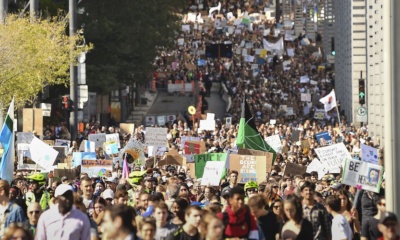
New York’s move comes as the Green New Deal is gaining in popularity across the U.S.—and in Canada—and as Extinction Rebellion protesters in the U.K. are leading a week of aggressive civil disobedience against a “life-denying system.”

“A climate justice movement is rising,” said Rachel Rivera, a member of the activist group New York Communities for Change. “It’s the beginning of a Green New Deal and it fills me with hope for our planet.”

Photo: pixabay

Originally published by Common Dreams

Continue Reading

Business

Global Divestment Movement Celebrates Vow of 1,000 Institutions, With Nearly $8 Trillion in Assets, to Ditch Fossil Fuels

Published

on

By

Ditch Fossil Fuels

by

“The momentum has been driven by a people-powered grassroots movement—it’s ordinary people pushing their local institutions to take a stand against the fossil fuel industry.”

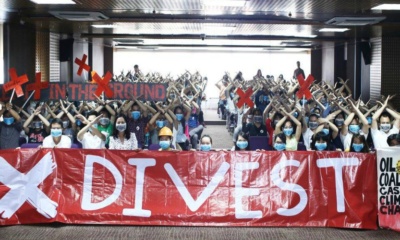
While the COP24 climate talks are at risk of ending without a concrete plan of action thanks in large part to the Trump administration’s commitment to a dirty energy agenda, environmental groups on Thursday celebrated a major milestone in the global movement to take down the fossil fuel industry after the number of public and private institutions that have vowed to divest from oil, gas, and coal companies surpassed 1,000.

“When this movement started in 2012, we aimed to catalyze a truly global shift in public attitudes to the fossil fuel industry, and people’s willingness to challenge the institutions that financially support it,” May Boeve, executive director of 350.org, said in a statement. “While diplomats at the U.N. climate talks are having a hard time making progress, our movement has changed how society perceives the role of fossil fuel corporations and is actively keeping fossil fuels in the ground.”

According to 350, the institutions that have committed to divesting from fossil fuels hold nearly $8 trillion USD in combined assets. The 1,000th institution to vow to divest was Caisse des dépôts et consignations (CDC), which manages France’s public sector savings, pensions, and investments.

Coinciding with the new milestone, 350.org published a new report (pdf) detailing the rapid growth of the fossil fuel divestment movement over the past several years as climate science has made clear the necessity of immediately and boldly slashing carbon emissions to avoid global devastation.

“Since 2012, the fossil fuels divestment campaign has grown faster than any previous divestment movement,” the report notes. “From 181 institutions and $50 billion worth of assets committed to divestment at the end of 2013 to now more than 1,000 institutions with over $7.9 trillion in assets committed to divest from fossil fuels, we are slamming on the brakes of fossil fuel expansion.”

“Momentum for divestment has only accelerated: pledges span 37 countries with over 65 percent of commitments coming from outside the United States, and now include major capital cities, mainstream banks and insurance companies, massive pension funds, faith groups, cultural, health, and educational institutions—the institutions serving billions of people,” the report continues.

“This is a major milestone for the movement for a just transition to a zero-carbon, sustainable future for everyone,” added Ric Lander, divestment campaigner for Friends of the Earth. “Behind almost every one of these commitments is a group of committed people fighting for climate action and they should be proud of their achievements. They’ve persuaded, protested and brought the inarguable evidence of their case to decision-makers and won them over.”

With the 1,000 institution landmark reached, 350 said the global movement’s next ambitious goal is 2,020 divestments totaling $12 trillion in combined assets by 2020.

“For those investors who persist in engaging with the fossil fuel industry, despite mounting evidence of its failure to achieve anything, we ask them to change tack as the science and justice demands in this moment,” 350’s report concluded. “If companies are not on track to keep their reserves in the ground or play their part in meeting the 1.5°C target, investors must walk away. The clock is ticking on multiple carbon bombs around the world as we approach 2020.”

Originally published by Common Dreams

Continue Reading

Living

Save the Planet—With Good Union Jobs

Published

on

By

Save the Planet

by

Across the country, you’ll find millions of working families whose wages haven’t budged in a generation, even as the cost of living has skyrocketed.

Many of these same communities are now getting hit hardest by floods, droughts, storms, and other climate disasters. How are workers going to withstand rising climate risks if their paychecks don’t even cover the bills, while corporate polluters rake in profits?

Our communities don’t experience climate change and inequality as two isolated issues, but as interlinked crises.

A Green New Deal offers an immense opportunity to tackle both crises at the speed and scale that justice and science demand. It’s the only plan out there to transition to a clean energy economy built on good, union jobs that leaves no worker — or community — behind.

It’s a roadmap rooted in solid, realistic changes that are already happening. From the Midwest to the South to the coasts, communities are retrofitting buildings to save energy, replacing lead pipes to ensure clean water, and restoring green spaces to reduce climate-related flooding.

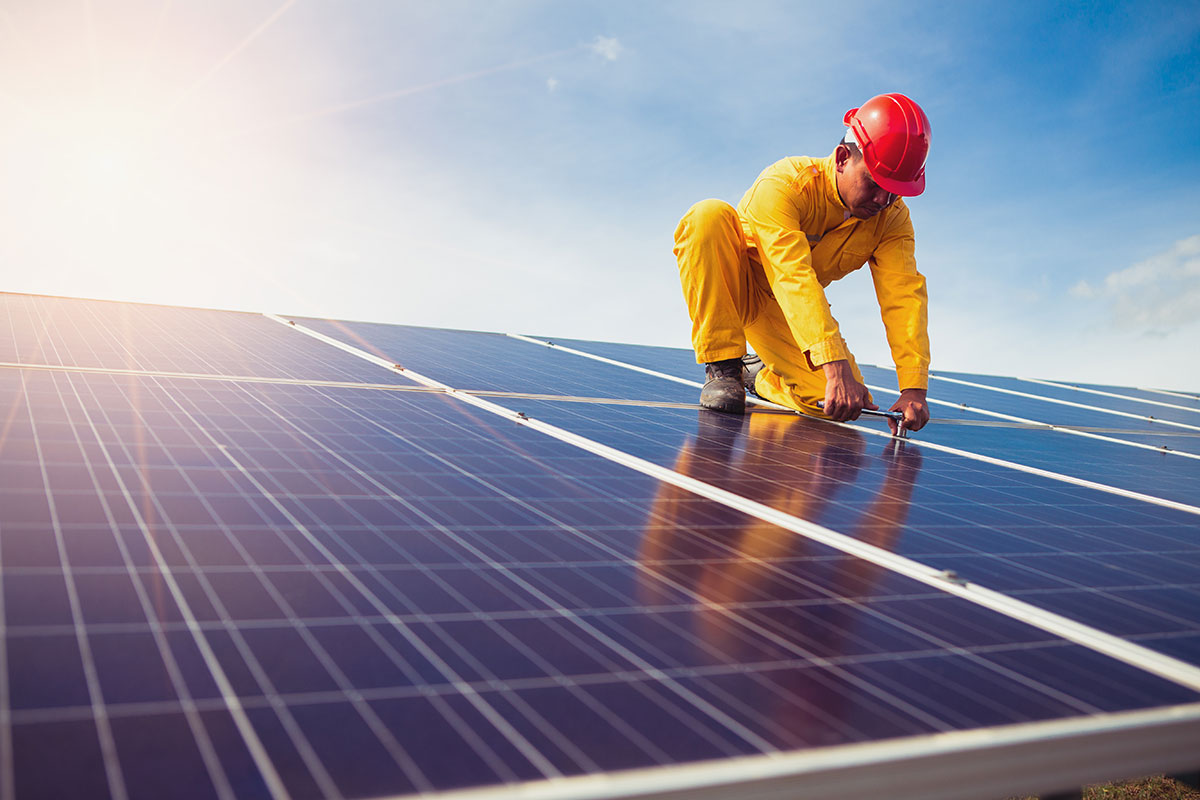
Meanwhile, broad local coalitions are pushing for investments in local wind and solar manufacturing, clean and affordable light rail, wetlands restoration, smart electric grids, and sustainable family farming.

These programs are already creating high-paying jobs, slashing pollution as well as energy bills, and supporting community-led efforts to prevent climate disasters. Our generational task of bringing wages up and climate pollution down is both doable and indispensable—and it starts with massively scaling up these local solutions.

Some politicians try to divide us by saying we have to choose between good jobs and healthy communities. This is a false choice.

In fact, a Green New Deal is an opportunity to create millions of good union jobs, clean up our air and water, and to become more resilient in the face of the climate crisis. It’s an opportunity to cut energy costs by providing cheaper, more efficient choices for clean energy and transportation. And it’s an opportunity to build a more just economy — and society — by investing directly in the workers and communities who got the worst deal in the economic status quo.

For far too long, the wealthiest corporations have profited from a system that allows workers and communities — especially immigrants, people of color, and the poor of all races — to bear the brunt of toxic pollution, climate disasters, and economic insecurity.

We can change this.

We don’t lack ideas — frontline communities are already generating realistic solutions. And we don’t lack funding sources — the corporations profiting from low wages and climate pollution have the funds to support a transition to a new economy.

What we really need to make the Green New Deal real is for people of conscience to work together, grow our movement, and push our representatives to invest in a just transition for our communities.

Right now, political will is mounting. More than 100 members of Congress have already endorsed a Green New Deal, and that number continues to grow. So does the panoply of environmental, labor, and justice groups backing the idea — including our own.

As that movement gains momentum, so does our resolve to lay the groundwork for a new economy — one powered by family-sustaining wages and clean energy.

If that goal seems big, it’s no bigger than the problems our communities face. That, after all, is what this Green New Deal moment is all about: an invitation to all of us to name solutions that match the scale of our problems.

Héctor Figueroa is the president of 32BJ Service Employees International Union, the largest property service workers union in the country and one of the largest unions representing immigrant workers.

Originally published by Common Dreams

Continue Reading

Trending